Kubernetes-native
One declarative infrastructure foundation.
Run virtual machines, managed Kubernetes and application services on infrastructure you control—with tenant isolation, integrated storage and networking, and one consistent API.
One declarative infrastructure foundation.
Isolation for teams, environments and customers.
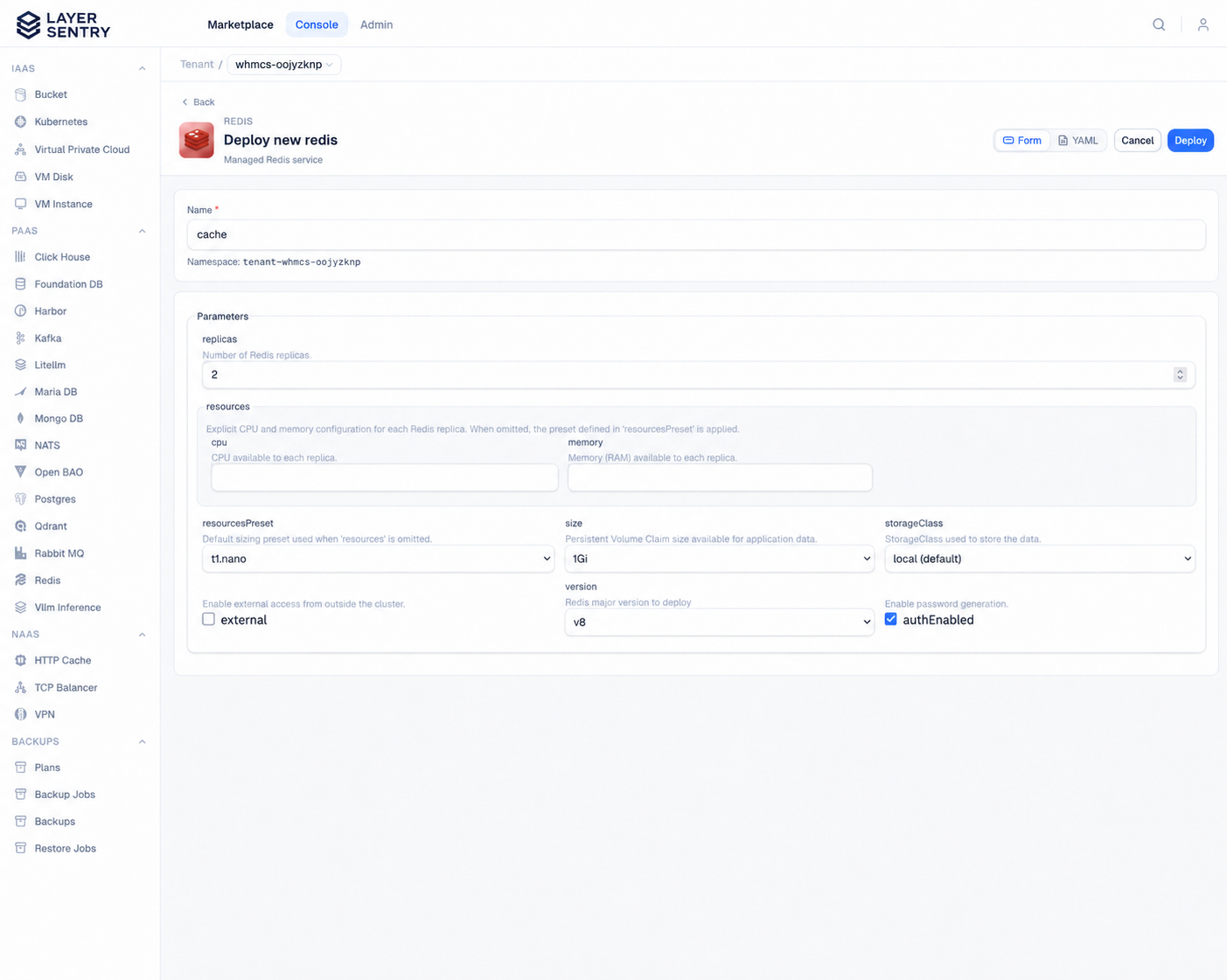
Human workflows and repeatable automation.
Built for data center, edge and controlled sites.
Administrators govern the underlying platform while tenants consume approved services through clear, repeatable workflows.
Virtual machines and Kubernetes remain distinct workload choices while sharing Layer Sentry storage, networking, tenancy, operations and API foundations.
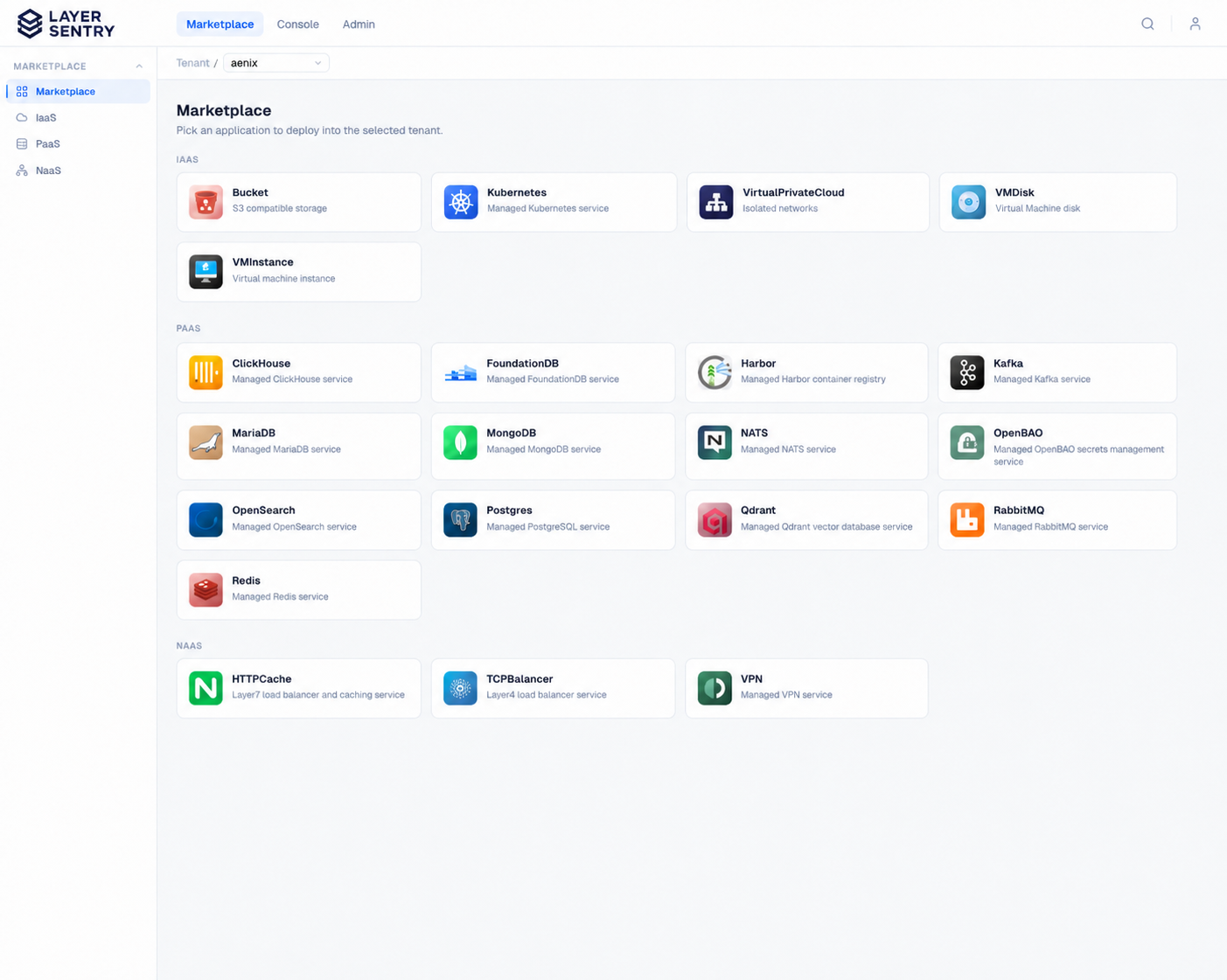
Publish approved infrastructure, data, messaging and connectivity services through the same tenant-aware workflow.
KVM compute instance
Persistent VM storage
Managed tenant cluster
Isolated tenant network
S3-compatible object service
Managed relational database
Managed SQL database
Document data service
In-memory data service
Analytical database
Search and analytics
Vector database service
Distributed event streaming
Message broker
Cloud-native messaging
Application delivery
TCP service publishing
Managed connectivity
Container registry
Secrets management
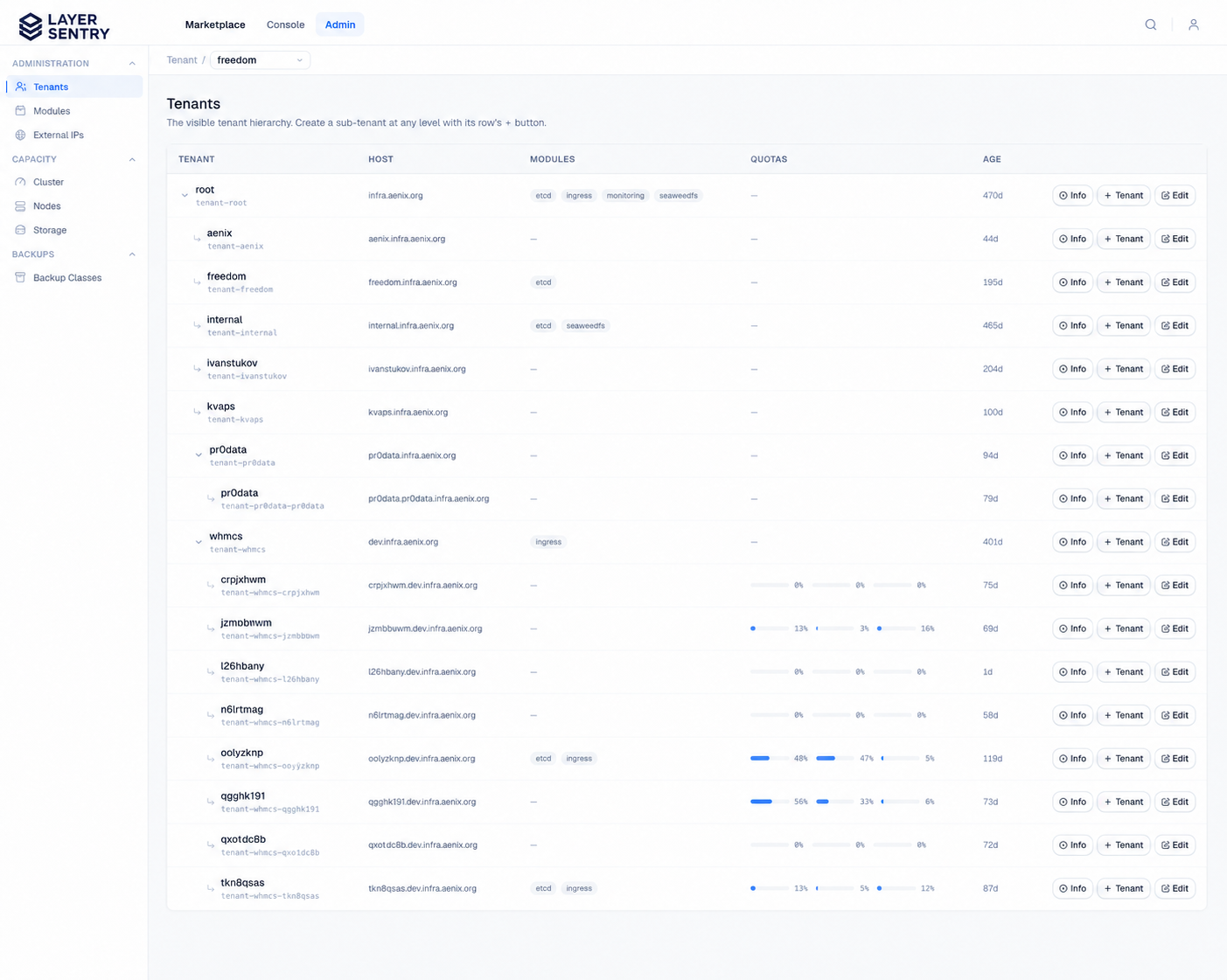
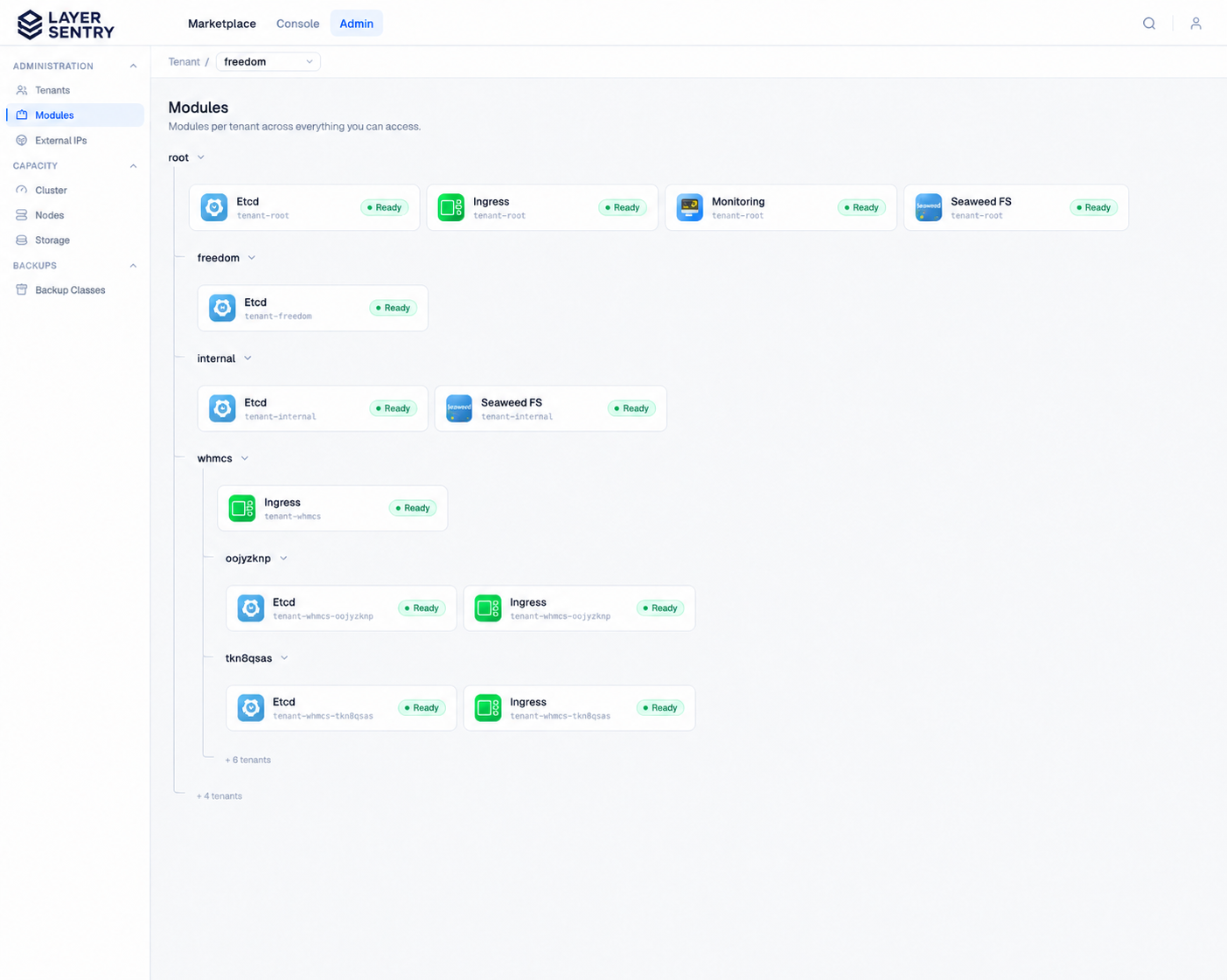
Organize business units, environments or customers in a hierarchical tenant model with delegated administration, modules and resource quotas.
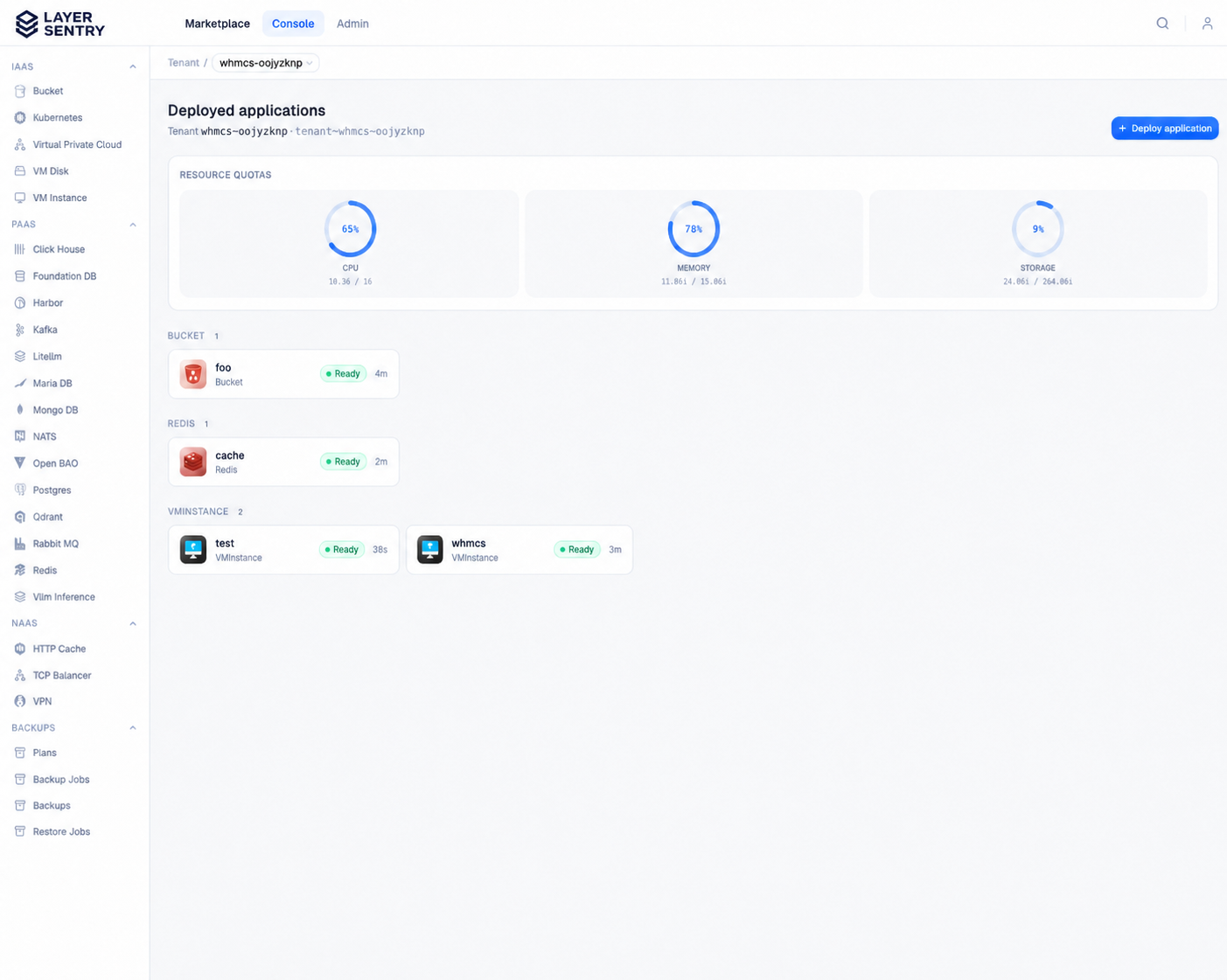
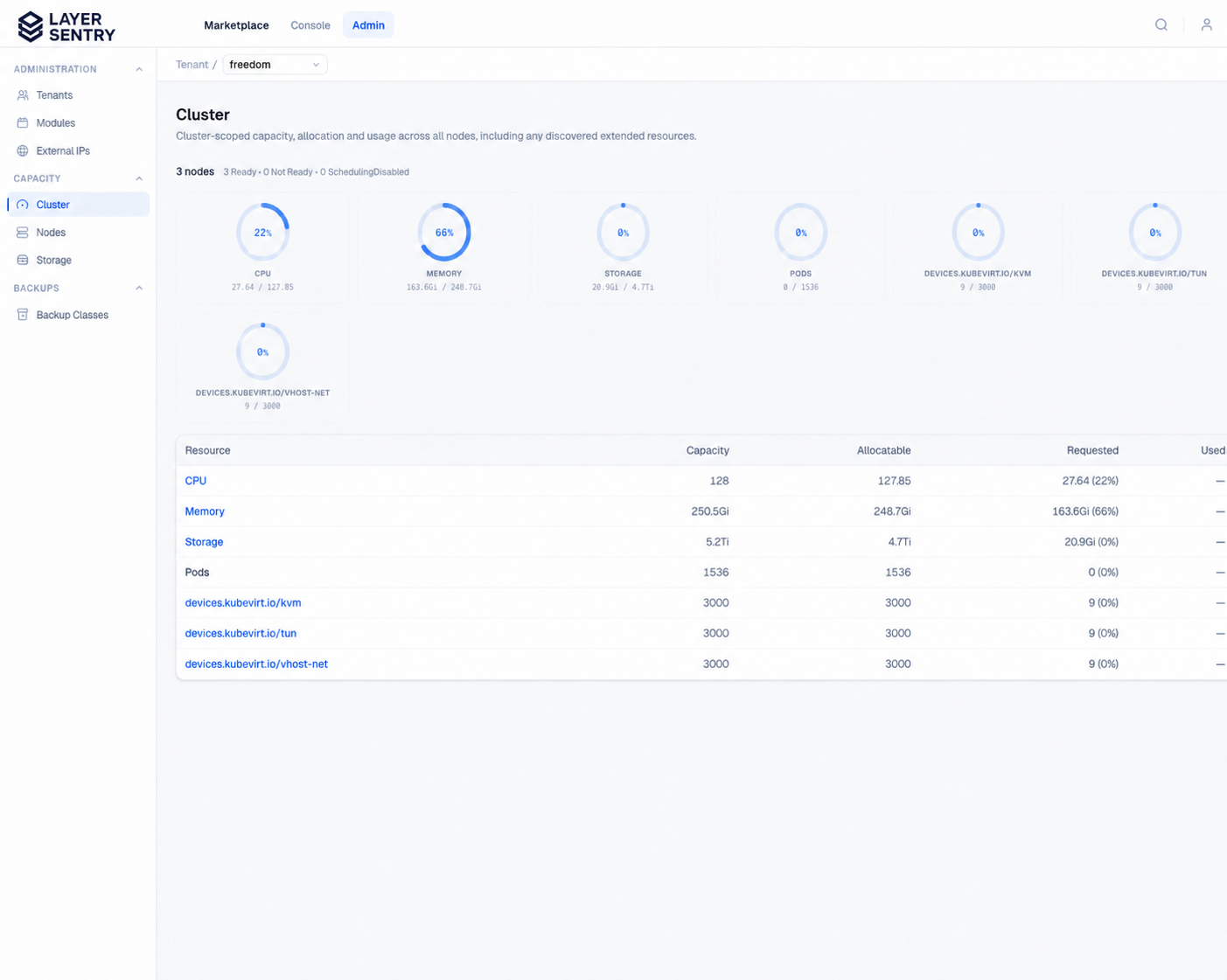
Understand cluster capacity, allocation and infrastructure health without moving between disconnected management tools.
CPU, memory, storage, pods and virtualization resources.
Allocation and quota context across isolated environments.
Backup classes, jobs, artifacts and restore workflows.
Turn owned infrastructure into governed, self-service cloud capacity.
Learn more →Operate current and new VM workloads on a Kubernetes-native foundation.
Learn more →Deliver approved services without giving up infrastructure governance.
Learn more →Separate customers, services and quotas on shared infrastructure.
Learn more →Answers to the questions infrastructure and platform teams ask first.
Talk to an architect →Layer Sentry is a Kubernetes-native private-cloud platform for virtual machines, tenant Kubernetes, managed applications, storage, networking and automation.
KVM-based virtual machines run on the platform’s Kubernetes-native infrastructure foundation and use managed disks, images, networking and lifecycle workflows.
No. Tenant Kubernetes environments have their own control planes and VM worker nodes, with independent lifecycle, persistent volumes and load-balancing services.
Hierarchical tenants provide separate resource and network scopes, RBAC, quotas and delegated administration.
The catalog includes VMs, tenant Kubernetes, databases, caches, messaging, registry, object storage, load balancing, HTTP delivery and VPN services.
Yes. Resources can be managed through the dashboard, kubectl, Terraform or programmatic clients using the Kubernetes API model.
Select your starting priorities to create a focused evaluation brief for your infrastructure and platform teams.
Turn infrastructure you control into shared cloud capacity with self-service delivery and one operational context.
Final topology, sizing, integrations and lifecycle design are confirmed during architecture qualification.